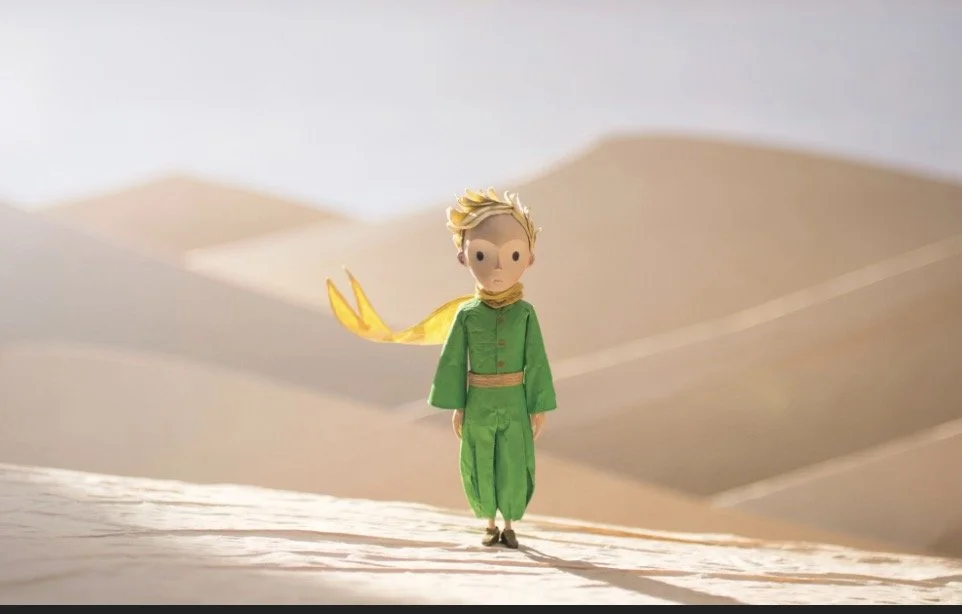
Film still of The Little Prince movie, from Google
What is truly essential is invisible to the eye
After the Little Prince arrived on Earth, he was no longer lonely. He finally found the friendship he had longed for and came to understand what love truly is. The pilot, too, was no longer lonely because of the Little Prince’s appearance.
In fact, the author of The Little Prince reveals in the second chapter that he himself is lonely. Do you ever feel the same as the author, as the pilot, or as the Little Prince? Even though you chat with people every day and have hundreds or even thousands of friends on WhatsApp or IG, you may still feel lonely. Because among all those “friends,” there is not a single one you can truly open your heart to, not one who is willing to laugh and cry with you. The messages you receive are nothing more than echoes.
Standing on top of a mountain, the Little Prince shouts into the distance, only to hear his own echo. He says, “I am lonely.”
Until he meets the fox, who becomes both a teacher and a friend. The fox tells him that “to tame” means to establish ties. The fox says that, to him, the Little Prince is just a little boy like thousands of others, and to the Little Prince, he is just a fox like thousands of others. But once the Little Prince tames him, they will become unique to each other in all the world.
Then the fox says, “My life is very monotonous. Every day is the same. But if you tame me, my life will be filled with sunshine. I will recognize a special set of footsteps. Other footsteps make me hurry back underground, but yours will call me out of my burrow like music.”
The fox asks the Little Prince to look at the wheat fields and continues, “I do not eat bread, so wheat means nothing to me. The fields are of no use. But your hair is golden, just like the wheat. If you tame me, the wheat fields will remind me of you. And I will come to love the sound of the wind in the wheat.”
There is a line written by the lyricist Vincent Fang for Jay Chou in Secret that resonates deeply with what the fox said: “The most beautiful thing is not a rainy day, but the eaves we once sheltered under together.”
Although the fox speaks of friendship, what I see is the beauty of love. Perhaps love is just like this: before two people truly know each other, they are almost insignificant in each other’s lives. But once a connection is formed, the other person becomes one of a kind in your world. They become so special that every shared moment, every song you hear, will bring back memories of being with them—each one filled with warmth and meaning.
However, the Little Prince says to the fox, “I would like to tame you, but I don’t have time. I still have other friends to discover.”
The fox replies, “One only understands the things that one tames. Humans no longer have time to understand anything. They buy ready-made things from shops. But since there is no shop anywhere where one can buy friendship, humans no longer have friends. If you want a friend, tame me.”
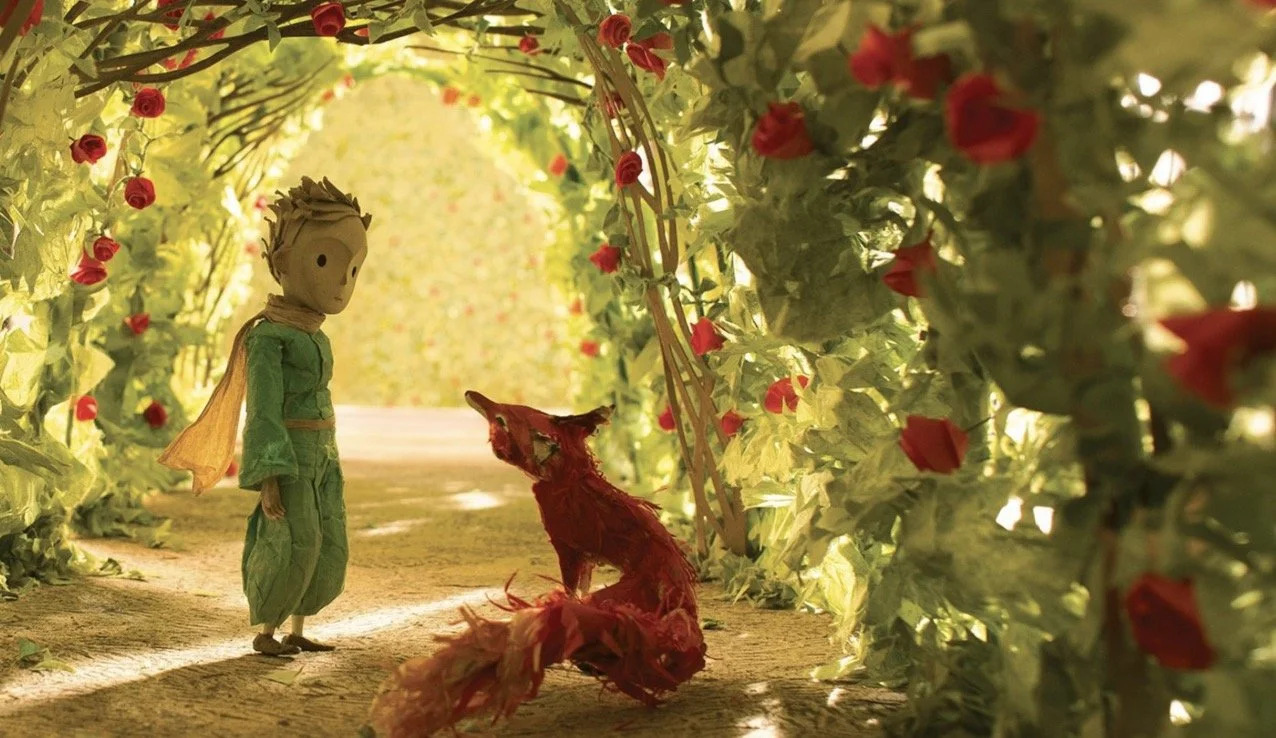
Film still of The Little Prince movie, from Google
Here, the fox tells the Little Prince that if you want a friend, you must be willing to pay the price of time—it cannot be gained out of nothing. People are always “too busy” to do this or that. They want friends, they want a partner, yet they are unwilling to give of themselves, unwilling to spend time being present with someone.
You can never buy friendship or love in a shop. The only thing you can do is to give your time. Everything comes with a cost, and these costs cannot be ignored.
The next day, the Little Prince returns to the fox. The fox says, “It would have been better if you had come back at the same time. If you come, for example, at four o’clock in the afternoon, then from three o’clock onward I shall begin to feel happy. As the hour advances, I shall feel happier and happier. By four o’clock, I shall already be restless and anxious—I shall show you how happy I am!
But if you come at just any time, I shall never know when to prepare my heart to receive you. There must be rites.”
What the fox calls “rites” is, in essence, a kind of responsibility. In order to tame the fox, the Little Prince must return at the same time every day. That, in itself, is a responsibility he chooses to take on.
When the Little Prince is about to leave, the fox begins to cry. The Little Prince says, “It is your own fault. You wanted me to tame you.”
“Yes, that is so,” says the fox.
“But now you are going to cry! Then it has done you no good at all!”
“You are wrong,” the fox replies. “It has done me good, because of the color of the wheat fields.”
The fox then tells him, “Go and look again at the five thousand roses. You will understand that you are unique in all the world. And when you come back, I will give you a secret as a gift.”
So the Little Prince returns to the garden of five thousand roses and says to them: “You are not at all like my rose. As yet, you are nothing. No one has tamed you, and you have tamed no one. You are beautiful, but you are empty. No one could die for you. Of course, an ordinary passerby would think that my rose looks just like you. But in herself alone, she is more important than all of you together.
Because it is she that I have watered; because it is she that I have placed under the glass globe; because it is she that I have sheltered behind the screen; because it is for her that I have killed the caterpillars (except the two or three for the butterflies); because it is she that I have listened to, when she complained, or boasted, or even sometimes when she said nothing at all.
Because she is my rose.”
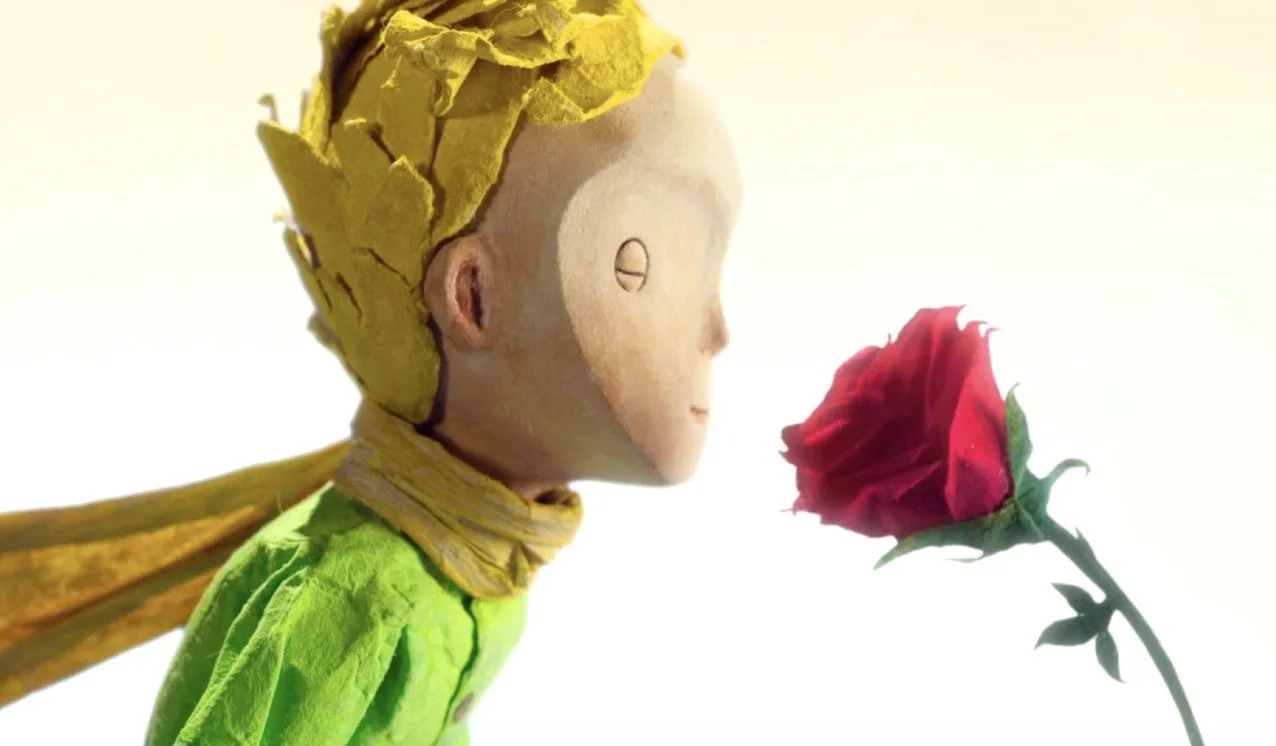
Film still of The Little Prince movie, from Google
At the same time, the Little Prince accepts the pain of love—the rose has thorns. Love is not always happiness and joy. Happiness and pain often exist together. In a sense, love inevitably carries pain. Yet happiness and pain are not truly contradictory. Joy and suffering are not necessarily opposites. Without pain as a reference, we would never know how precious happiness really is.
Is life itself not also filled with pain? Johann Wolfgang von Goethe once said: “He who has never eaten his bread with tears does not know the true taste of life; he who has never spent the dark night weeping does not know the true meaning of life.”
Without experiencing these things personally, one can never truly understand them. But it is precisely through pain that we learn to feel, to grow, to take responsibility, and to learn how to love and be loved. True love, therefore, is a kind of responsibility, not merely the satisfaction of desire. If one constantly seeks to satisfy every desire, in the end one simply becomes a slave to those desires.
After the Little Prince returns from the garden, the fox tells him the secret—a secret that the Little Prince later passes on to the lonely pilot: “What is truly essential is invisible to the eye.”
The Little Prince also tells the pilot that houses, stars, and even the desert are beautiful because of something invisible. The rose has a visible beauty, but the invisible beauty is abstract. Throughout our lives, we search within specific people and moments for that invisible goodness and responsibility.
Perhaps it is precisely because of that invisible beauty that the Little Prince is willing to sacrifice his life in order to return to his rose. Perhaps that is what love truly is.
So, be grateful for every encounter. Among the countless cities in the world, there will always be one city that feels different to you. Is it not because the people you love are there?
And finally, may there come a day when you too will fall in love with the sound of the wind moving through the wheat fields. May you also discover, in someone, that quiet sense of responsibility and happiness.
May everyone find the one rose that belongs only to them.
