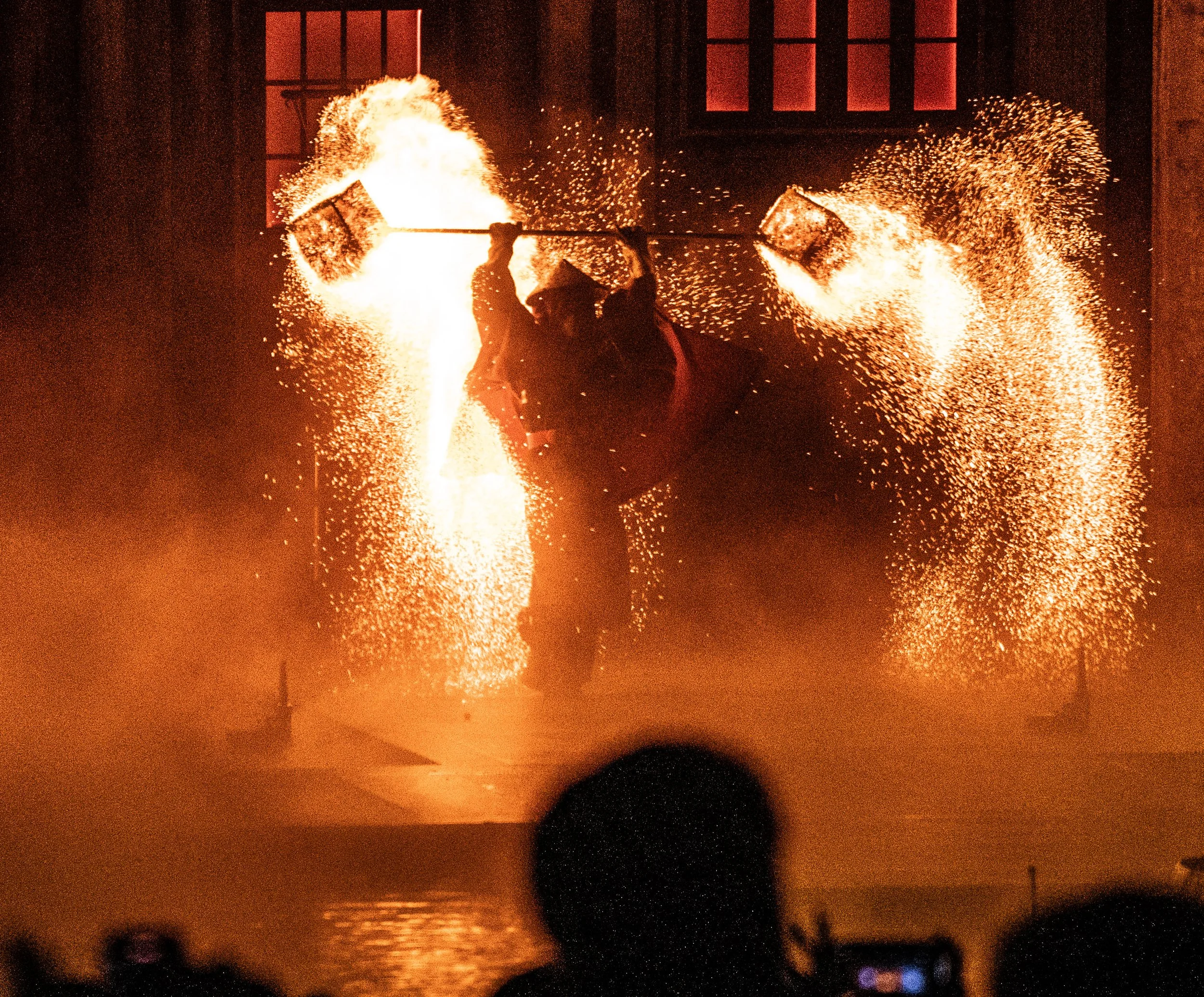
Fire pot show, 2025
Fire pot (Huohu), also known as the “fire meteor pot,” is an important part of traditional Chinese folk craftsmanship and performance art. It integrates elements of acrobatics, dance, and fire performance, and is highly valued for both its visual impact and cultural symbolism. Originating in northern China, particularly in regions such as Shanxi and Hebei, it is commonly seen during festivals, temple fairs, and important folk rituals. It serves as a symbolic performance through which people pray for blessings, good fortune, and protection from evil.
The basic structure of a fire pot usually consists of a heat-resistant pot attached to a long rope. The pot is filled with flammable materials such as charcoal, pine resin, or iron filings. Once ignited, the performer swings and spins the pot, causing sparks to scatter and creating dazzling trails of fire in the air. Through coordinated movements of the wrists, arms, and even the entire body, performers rotate, toss, and maneuver the fire pot, showcasing complex and graceful techniques such as “Single Dragon Out of the Sea,” “Double Dragons Playing with a Pearl,” and “Spinning Fire Wheel,” all of which create a striking visual spectacle.
From a technical perspective, fire pot performance demands a high level of physical fitness and skill. Performers need strength and endurance to sustain long periods of high-intensity spinning. At the same time, a strong sense of rhythm and spatial awareness is essential, as even a slight mistake may result in injury from flying sparks or failed movements. In addition, performers must possess strong psychological resilience, maintaining calmness and focus while working in high heat and close proximity to flames.
Beyond being a performance art, the fire pot carries rich cultural significance. In traditional Chinese beliefs, fire symbolizes light, warmth, and vitality, while also serving as a means of warding off evil. For this reason, fire pot performances are often featured during festivals such as the Spring Festival and Lantern Festival, expressing wishes for peace, prosperity, and happiness in the coming year. In some regions, these performances are also incorporated into ritual ceremonies, giving them religious and ceremonial importance.
With the passage of time, fire pot techniques have continued to evolve and innovate. On one hand, traditional practices are being preserved through intangible cultural heritage initiatives, with some folk artists recognized as official inheritors who actively participate in teaching and public demonstrations. On the other hand, the integration of modern stage elements—such as lighting, music, and choreography—has made fire pot performances more diverse and artistically refined, attracting greater interest from younger audiences.
However, the preservation of fire pot traditions also faces challenges. The long learning process, inherent risks, and the wide range of modern entertainment options have led to fewer young people willing to dedicate themselves to mastering this art. Therefore, strengthening cultural promotion, enhancing protection efforts, and encouraging integration with modern cultural industries have become important priorities.
Overall, as a unique form of folk art, the fire pot not only showcases the creativity and expressive power of traditional Chinese culture, but also reflects the harmonious relationship between humans and natural elements. While preserving its historical roots, it continues to evolve and thrive, serving as an important cultural bridge connecting the past and the future.
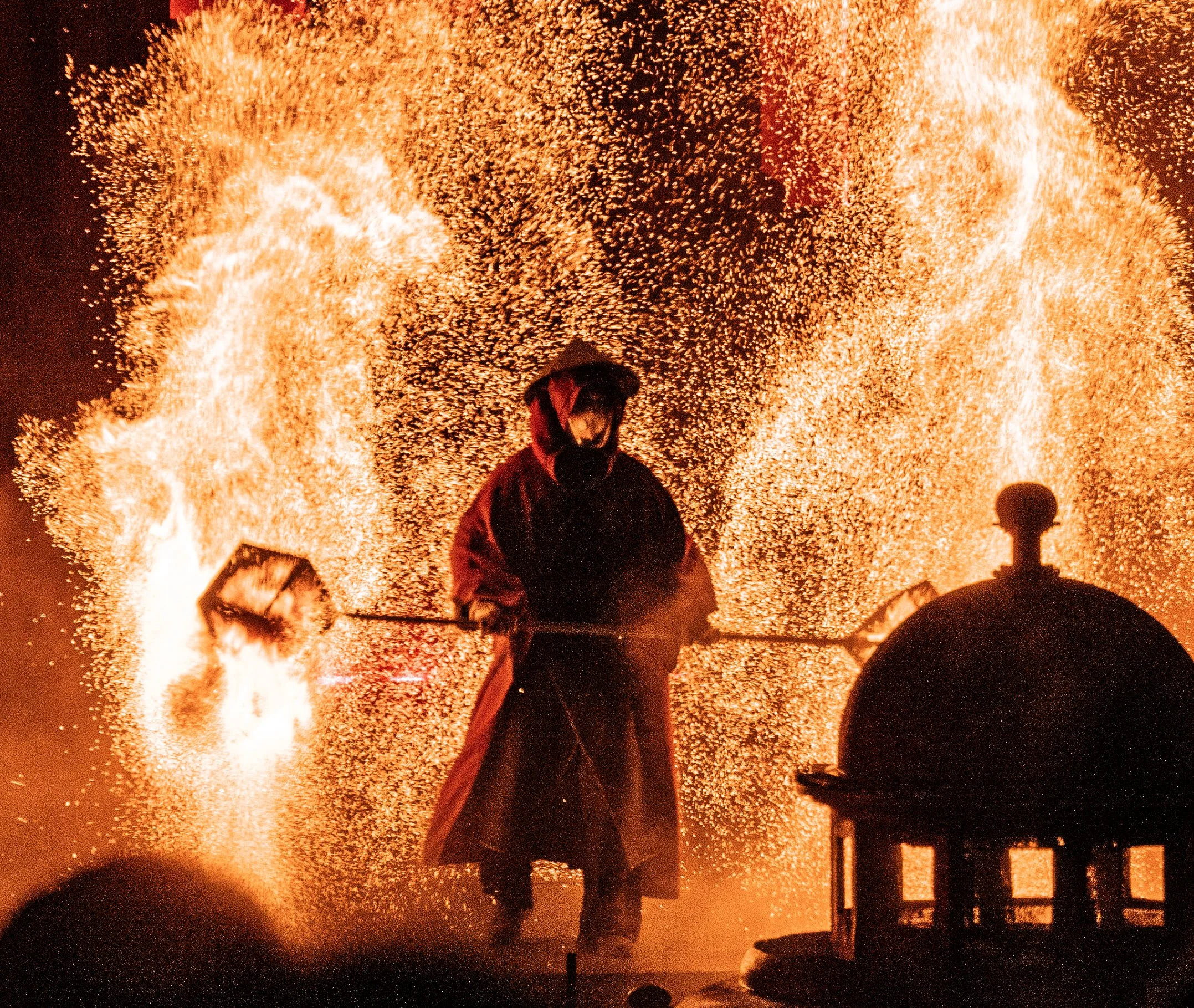
Fire pot show, 2025
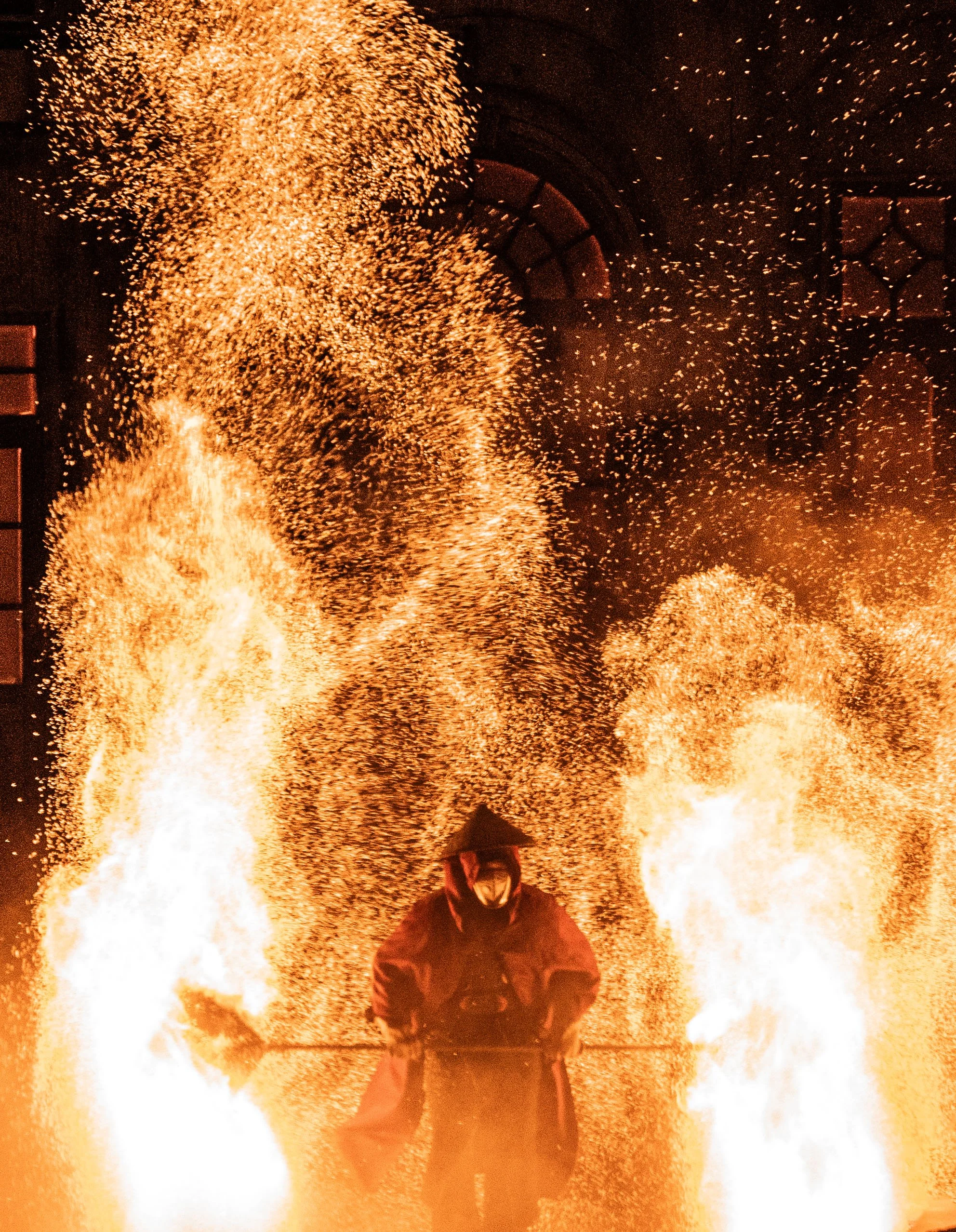
Fire pot show, 2025
