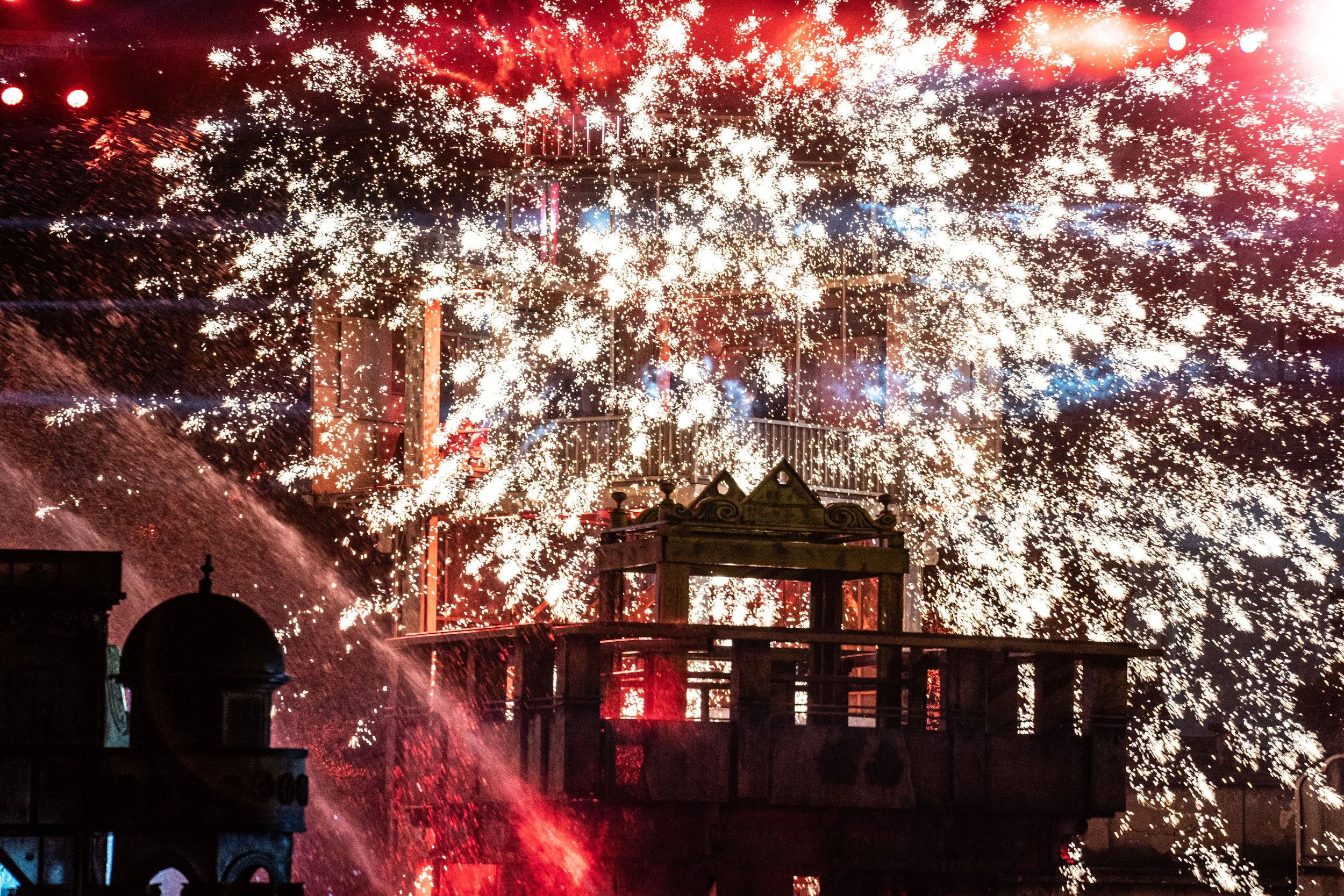
Datiehua show, 2025
Datiehua is a highly spectacular traditional Chinese folk art that originated in regions where ancient iron-smelting industries once flourished, particularly in Henan and Shanxi provinces. It can be traced back to the Song Dynasty, when blacksmiths would perform “flower beating” during festivals as a way to pray for blessings and good fortune. Over time, it gradually evolved into a unique form of folk performance art. Due to its long history and distinctive techniques, it has been officially recognized as part of China’s intangible cultural heritage.
The essence of Datiehua lies in “turning iron into flowers.” During a performance, craftsmen heat raw iron in a furnace to temperatures exceeding 1600°C until it fully melts. The performer then uses a specially designed wooden paddle or iron ladle to strike and fling the molten iron into the air or onto surfaces such as walls or iron plates. Upon impact, the molten iron bursts into countless sparks, resembling fireworks in bloom—hence the name “iron flowers.” Against the backdrop of the night sky, these golden showers of sparks cascade down dramatically, creating a breathtaking and visually striking scene.
From a technical perspective, this performance demands exceptional skill. First, precise control of temperature is crucial, as iron that is too hot or too cool will affect the visual outcome. Second, the force and angle of the strike determine the shape and spread of the “iron flowers.” In addition, performers must possess extensive experience and strong mental resilience, as the process involves extreme heat, flying molten metal, and inherent safety risks. Traditionally, artisans wear heavy protective clothing and may even use wet sacks or sheepskin as makeshift protection against the intense heat.
Culturally, Datiehua is more than just a display of craftsmanship—it carries deep symbolic meaning. In ancient Chinese beliefs, fire represents light, warmth, vitality, and the power to ward off evil. As a result, this performance is often staged during major festivals such as the Spring Festival and Lantern Festival, symbolizing the farewell to the old and the welcoming of the new, while expressing hopes for favorable weather, abundant harvests, and prosperity in the coming year. It also reflects the wisdom and courage of working people and stands as a representative fusion of agricultural civilization and handicraft traditions.
With the passage of time, Datiehua has continued to evolve and innovate. In some regions, it has been combined with modern stage design, lighting, and even integrated into tourism performances, giving this ancient art a renewed vitality. At the same time, various intangible cultural heritage protection initiatives are helping to preserve and promote it through training programs and educational outreach, encouraging younger generations to learn and participate.
However, the preservation of this tradition still faces challenges. The high level of risk, long training period, and demanding physical and experiential requirements have discouraged many young people from pursuing it as a long-term practice. Moreover, the widespread popularity of modern fireworks and other forms of entertainment has, to some extent, reduced its market demand.
Overall, as an important symbol of traditional Chinese culture, Datiehua showcases both the visual power and cultural depth of folk art. It is not only an art of “fire and iron,” but also a cultural expression that carries historical memory and national spirit, maintaining significant value for preservation and development in the modern era.
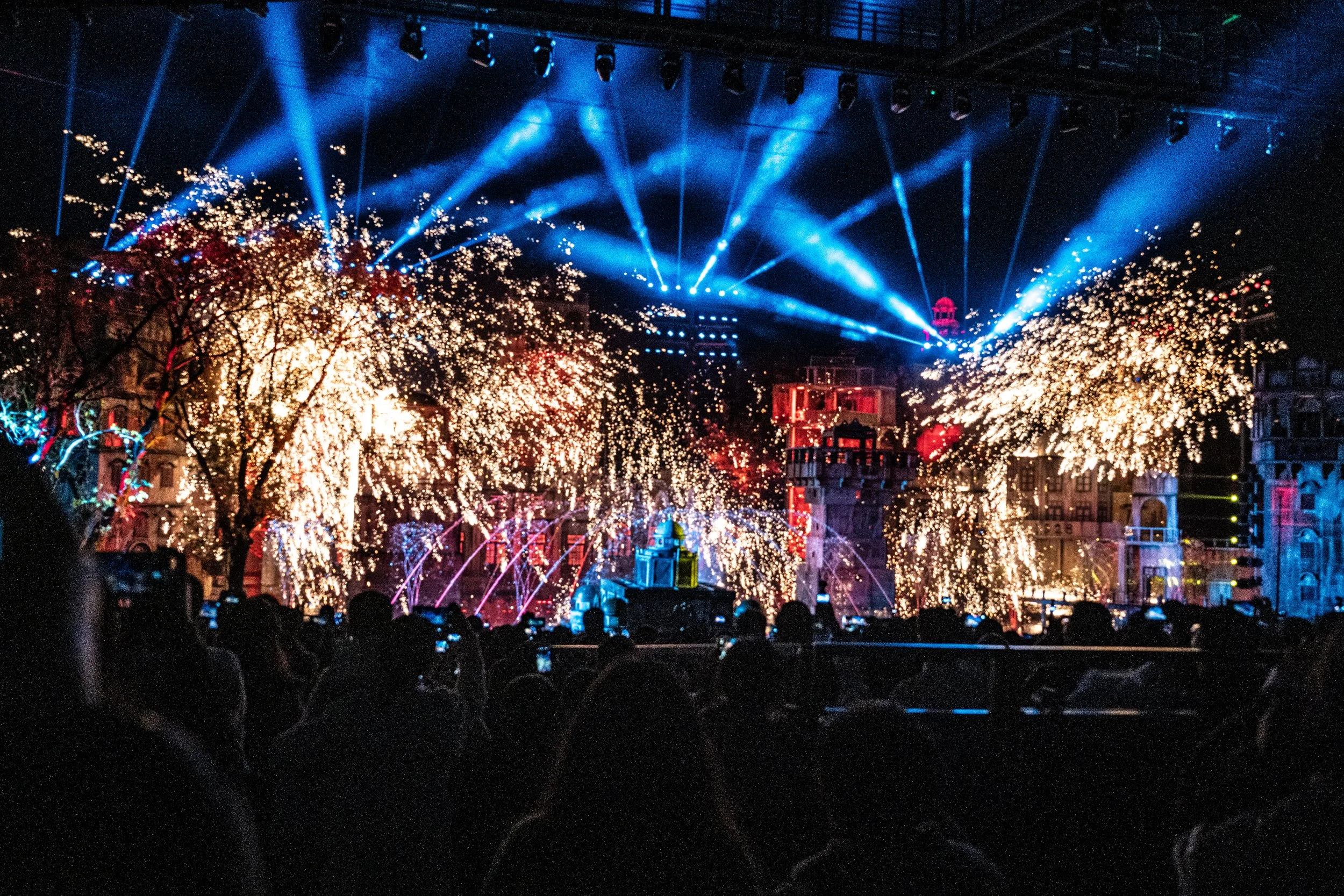
Datiehua show, 2025
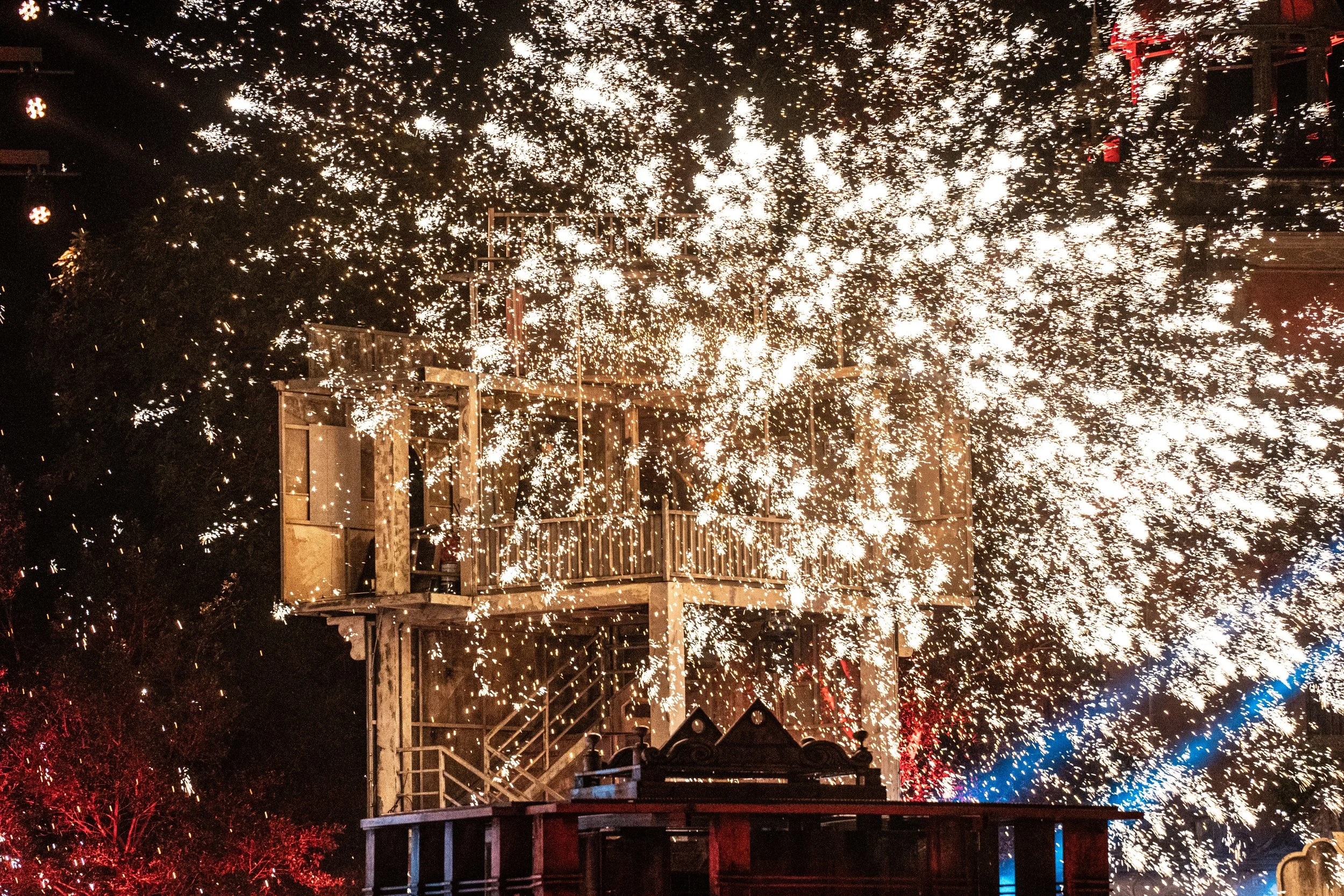
Datiehua show, 2025
